(~ようです / ~ような+名詞 / ~ように+動詞・形容詞) JLPT N3 Grammar Explanation and Teaching Method
まるで羊のようね。


僕には綿菓子のようにおいしそうに見えるんですが…


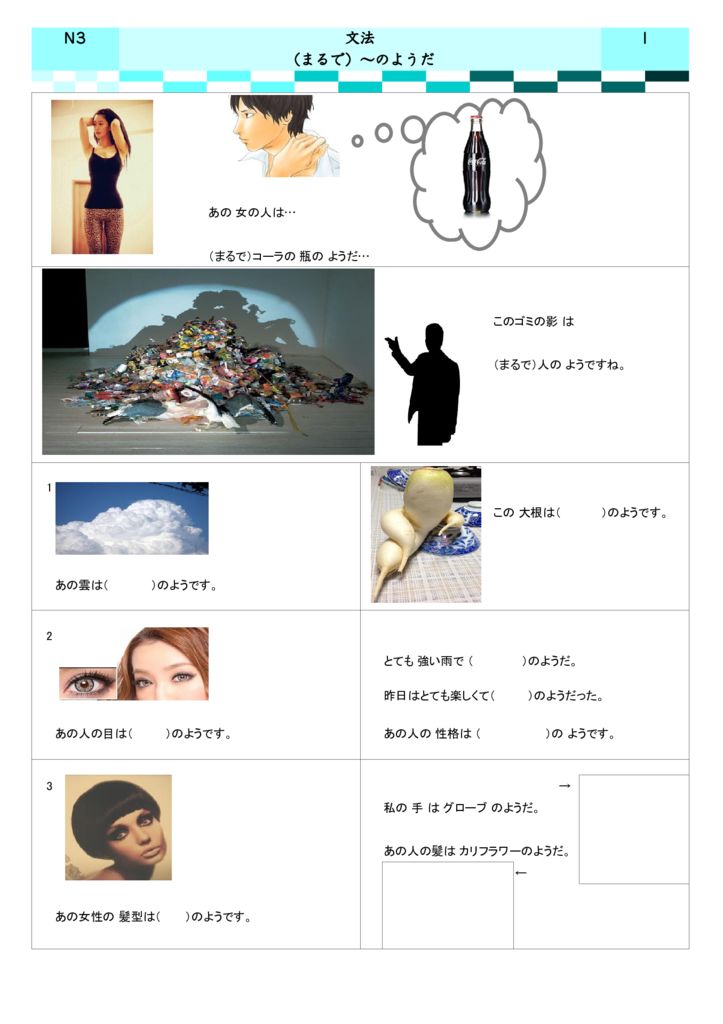
~のようです
(Put a picture of a ningyo-yaki on the whiteboard)

(Teacher draws a picture of what is happening on the whiteboard)
(名詞)のようです。
人の顔 の ようです。
鬼 の ようです。
天使 の ようです。
The phrase “(名詞)のようです" is used to make comparisons, indicating that something resembles or appears to be like the noun mentioned. Here are the examples provided:
-
人の顔のようです。
- It looks like a human face.
-
鬼のようです。
- It looks like a demon.
-
天使のようです。
- It looks like an angel.
In each sentence, “のようです" is used to express that something appears similar to the respective noun.
~のような+名詞
(Use the photo of the ningyo-yaki from earlier.)
(Painting a picture of heavy rain)
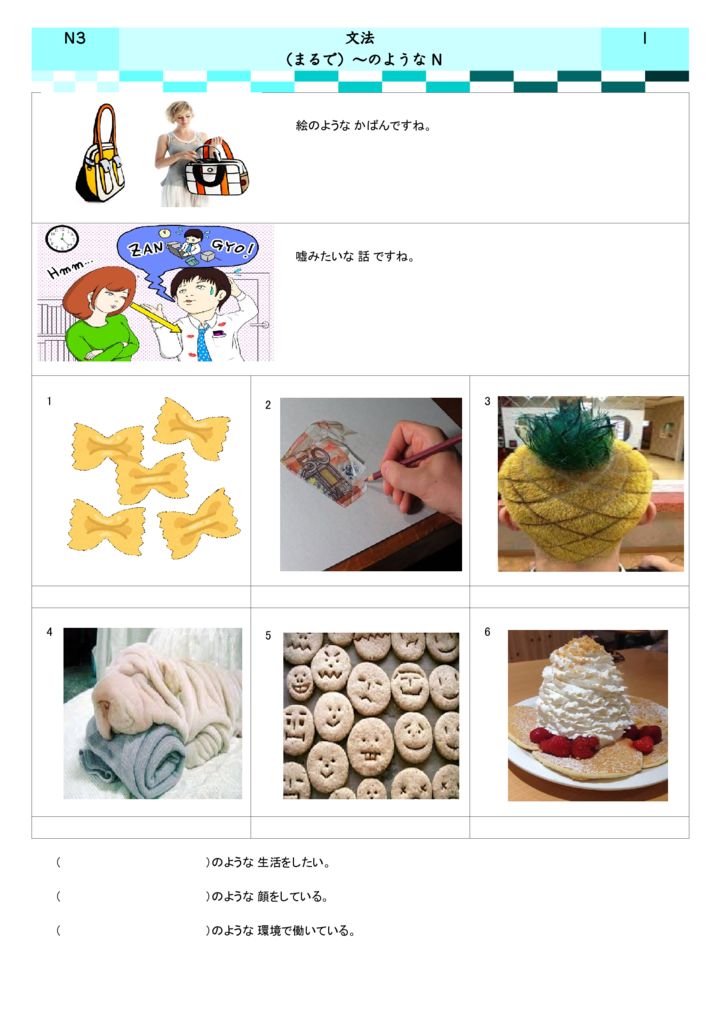
(名詞)のような(名詞)
人の顔 のような お菓子
滝 のような 雨
子供 のような 人
夢 のような 一日
The phrase “(名詞)のような(名詞)" is used to compare one noun to another, indicating that the second noun resembles or has the qualities of the first noun. Here are the examples provided:
-
人の顔のようなお菓子
- Candy that looks like a human face
-
滝のような雨
- Rain like a waterfall
-
子供のような人
- A person like a child
-
夢のような一日
- A day like a dream
In each example, “のような" is used to describe the second noun as being similar to or having qualities like the first noun.
~のように+動詞・形容詞
(Use the photo of the ningyo-yaki from earlier.)
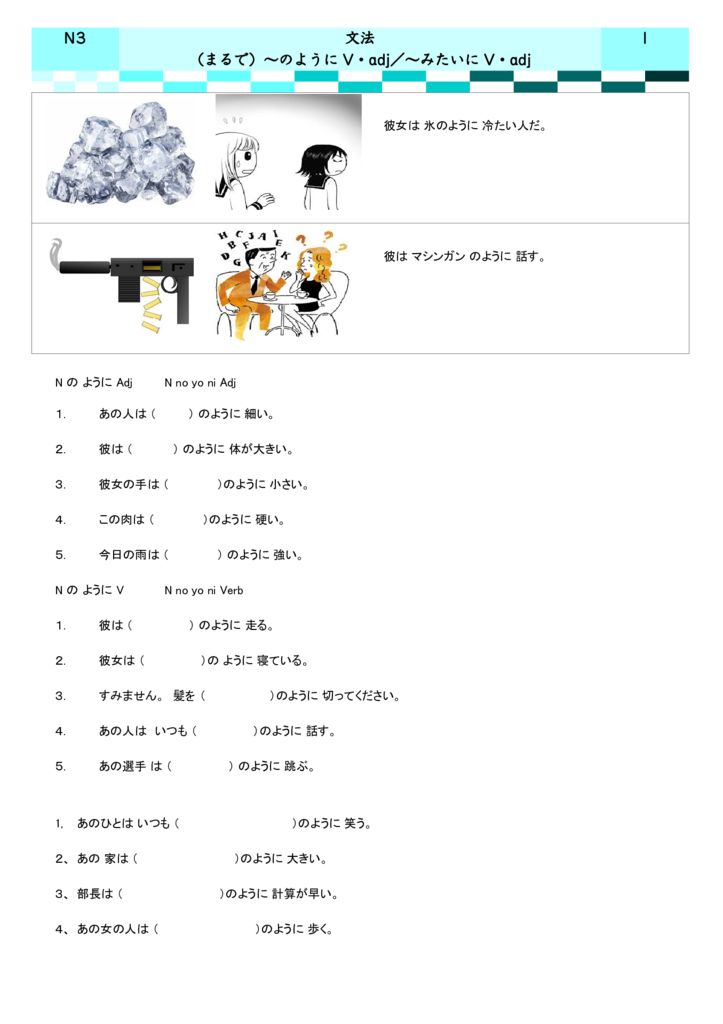
このお菓子はケーキのように甘いです。
あの人はお菓子を豚のように食べています。
(Draw a picture of a sleeping person)
彼女は子供のように寝ています。
彼女が寝ているので、部屋は図書館のように静かです。
ように+形容詞
夜 のように 暗いです。
石 のように 硬いです。
ように+動詞
子供 のように 寝ています。
雨が滝 のように 降ります。
The structure “ように+形容詞" is used to describe something by comparing it to another noun, indicating that it has the same qualities as the noun. The structure “ように+動詞" is used to describe an action by comparing it to another noun, indicating that the action is performed in a manner similar to the noun. Here are the examples provided:
ように + 形容詞
-
夜のように暗いです。
- It is as dark as night.
-
石のように硬いです。
- It is as hard as a stone.
ように + 動詞
-
子供のように寝ています。
- Sleeping like a child.
-
雨が滝のように降ります。
- The rain is falling like a waterfall.
In each example, “ように" is used to make comparisons, describing the quality or manner of something by likening it to another noun.
Practice
例 あの 人は 機械 ( のように )働きます。
① 今日は 夢( )1日だった。
② 私の父は山( )体が大きい。
③ 彼は子供( )嘘をついた。
④ この会社は 環境がよくて 楽園( )。
⑤ 歩き疲れて 足が 鉄( )重い。
⑥ 父は ビールを 水( )飲む。
⑦ 彼女の顔は 人形( )。
⑧ 彼女の料理は プロの料理( )おいしさだった。
⑨ 本当に楽しくて 1日がまるで 1時間( )感じられた。
⑩ 部長は おに( )顔をしておこっている。