Teaching Plans and Materials for “Minna no Nihongo” Lesson 14: How to teach the introduction of “te-form” ★

The “te-form" is finally making its appearance.

we need to first remember how to divide verbs into groups…
Then, the detailed rules for Group 1…
Once you firmly remember the “te-form," many sentence patterns will be easier to remember!!
Prioritize learning the transformation rules of the forms!

“Be able to use expressions for making requests, suggestions, and offers."
Talk about what you are doing using the present continuous tense.
Introduction to the Present Continuous Tense → Introduction to the Te-form
(Draw a picture on the whiteboard of a person about to eat a meal)
“Itadakimasu"
(Draw a picture on the whiteboard of a person who has finished eating)
“Gochisosama deshita."
(Draw a picture between the two of a person in the middle of eating a meal)
“Tabemasu" becomes “tabeteimasu".
“Masu" becomes “teimasu".
(Draw a picture on the whiteboard of a person drinking water)
|
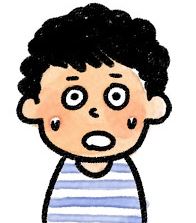
Teacher Everyone, this person is… drinking water. 
学生さん
Teacher No, that’s wrong. “Nomiteimasu" is incorrect. It’s “nondeimasu." ???
学生さん |
(Write “nomimasu I" and “tabemasu II" on the whiteboard)
Verb Grouping
Continuing from earlier…
Check the vocabulary list of Lesson 14 together.
Once you confirm that there are I, II, and III groups, let them think about how they are divided by rules.
|
Teacher “Nomimasu" is Group 1. “Tabemasu" is Group II. “Suuimasu" is Group I. “Agemasu" is Group II. Then, how about “Kakimasu"? It’s Group I. 
学生さん Sharp students will notice the rule quickly!!
ベテランさん |
Explain that if the sound before “masu" is
“i", it’s Group I, “e", it’s Group II, and “shimasu", “kimasu" are Group III.
Practice grouping verbs for a while without irregular verbs.
Once they get used to it…
|
Teacher How about “Mimasu"? It’s Group I.
学生さん
Teacher No, it’s Group II. |
Explain that when there is only one sound before “masu", it is also Group II. (Examples: imasu, nemasu, mimasu, etc.)
|
Teacher Then, how about “Okimasu"? It’s Group I!!
学生さん
Teacher No, “okimasu" is Group II. ???
学生さん |
Explain that there are special Group II verbs like “okimasu, karimasu, dekimasu", etc.
After confirming all the rules, practice grouping with oral or flashcards again
Group I
~「i」+masu ・・・「nomimasu, ikimasu, asobimasu」
Group II
~「e」+masu ・・・「tabemasu, akemasu, oshiemasu」
one sound + masu ・・・「mimasu, nemasu, imasu」
Specials ・・・「okimasu, karimasu, abimasu, dekimasu, orimasu」
Group III ・・・「shimasu / kimasu」

Te-form Rules
(Going back to the “~ています" picture from earlier…)

“Tabemasu" becomes “tabeteimasu".
“Tabete" is the “te-form".
(Draw a picture of a person opening a window)
|
Teacher The window… The window is open.
学生さん |
Te-form
Group II / Group III (masu → te)
II tabemasu → tabete
akemasu → akete
III shimasu → shite
kimasu → kite
Gohan wo tabete + imasu.
Mado wo akete + imasu.
(Using the picture of drinking water from earlier…)
(Draw a picture of a person smoking a cigarette)
It’s “sutteimasu."
Te-form
Group I
i, chi, ri → tte su i masu ma chi mas kae ri mas
su tte ma tte kae tte
ni, mi, bi → nde shi ni mas no mi mas aso bi mas
shi nde no nde aso nde
ki → ite ka ki mas ki ki mas
ka ite ki ite
gi → ide oyo gi mas iso gi mas
oyo ide iso ide
shi → shite hana shi mas ka shi mas
hana shite ka shite
Smoking a cigarette.
Drinking water.
Writing a letter.
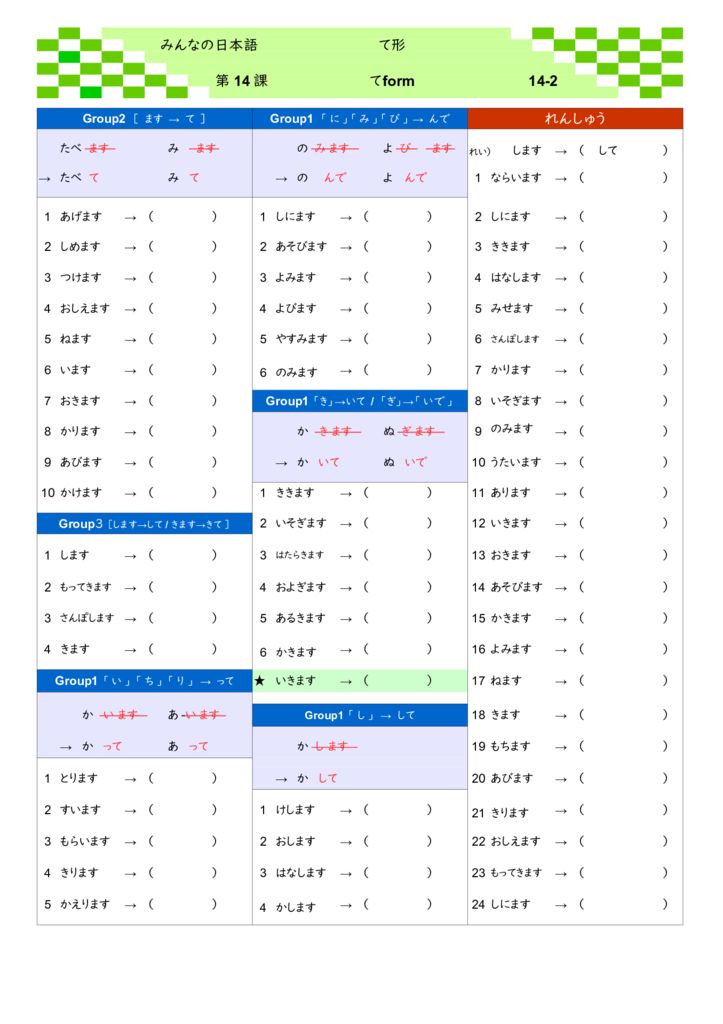
Once all the rules are confirmed, practice making te-forms.
After memorizing the te-form, practice sentence patterns using “~teimasu" with flashcards.
it’s easy!!