Explanation and Introduction to JLPT N3 Grammar(2)★
Here, we will provide information on how to teach, lesson plans, and materials for “Chukyu o Manabou Chukyu Zenki".

先輩さん

新人君
Is this the sequel to “Chukyu e Ikou"? I haven’t used it yet…
That’s right. The structure of the book is the same. You read the text and learn the grammar and vocabulary within the sentences. The listening part is better compared to “Chukyu e Ikou". Besides the audio of the text, there are also problems included.

Veteran

中堅さん
That’s right. Using other materials for listening is also a good idea. If aiming for the JLPT, it might be good to practice N3 listening as well.
The practice problems in the textbook range from easy to advanced. It’s possible to proceed with just the textbook, but if you expand on it well, the content of the lessons will be richer.
Veteran
新人君
Compared to “Chukyu e Ikou", the vocabulary is significantly more difficult.
That’s right. Students from Chinese-speaking regions can somewhat understand the meaning from the kanji, but non-kanji region learners struggle to memorize the vocabulary. It’s reassuring that vocabulary lists are prepared in various languages…
先輩さん
中堅さん
Students from Chinese-speaking regions sometimes understand only the meaning from the kanji and don’t properly memorize the reading, so it’s better to confirm that properly…
The approach for this book can be the same as “Chukyu e Ikou". The first approach is this: The same flow as “Minna no Nihongo"…
先輩さん
1. Confirm vocabulary
2. Introduce and practice grammar
3. Application practice (grammar and composition)
4. Reading comprehension
2. Introduce and practice grammar
3. Application practice (grammar and composition)
4. Reading comprehension
The other is the style of Japanese language classes. Read the text first, then confirm the vocabulary and grammar…
先輩さん
1. Read the text
2. Reading comprehension
3. Confirm vocabulary and grammar in the text
4. Application practice (grammar and composition)
2. Reading comprehension
3. Confirm vocabulary and grammar in the text
4. Application practice (grammar and composition)
At this level, students have a habit of looking up meanings and doing reading comprehension by themselves, so the second approach is also good!!
先輩さん
The flow of this textbook is… 1. Cover page 2. Text 3. Confirm and practice vocabulary 4. Confirm and practice sentence patterns 5. Application practice 6. Composition 7. Listening to the text (fill in the blanks) For capable students, it’s okay to listen before reading the text!!
Veteran
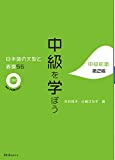
Chukyu o Manabou: Nihongo no Bunkei to Hyogen 56 Chukyu Zenki 2nd Edition
The study items for each lesson are above. For teaching methods, lesson plans, and materials, please move to each lesson’s page!!
先輩さん