Explanation and Introduction to JLPT N3 Grammar(1)★


Is it about JLPT N2 level? I haven’t used this book either…
It incorporates grammar at the N2 level!!
The book’s structure has also changed a bit…
The basic style is to read the text and learn the grammar and vocabulary within it, but
there are more parts for vocabulary, listening, and reading comprehension compared to “Chukyu e Ikou" and “Chukyu o Manabou Chukyu Zenki". There are also composition problems!!


It seems to balance reading, writing, listening, and speaking skills well!!
It’s possible to proceed with just the textbook, but if you expand on it well, the content of the lessons will be richer.
The vocabulary seems to be even more difficult compared to “Chukyu o Manabou".
The content of the book suddenly becomes more difficult, so be careful.
some students might struggle with the level difference, so be careful…
1. Cover Page
(The activity content varies by lesson. It could be composition, reading comprehension, or calculation…)
2. Keywords of the Text
(It’s vocabulary (kanji), but it also serves as practice to listen to the correct sounds of long vowels and geminate consonants by listening to the CD.)
3. Text
(The amount of vocabulary has increased significantly, and there are many difficult words.)
4. Let’s Confirm the Words
(Many patterns involve explaining the meanings of words in Japanese, which improves the skill of constructing sentences.)
5. Let’s Confirm the Content
(There are problems where you complete a table about the text or summarize the main points of the paragraphs.)
6. Learning Items
(Confirmation of learning sentence patterns.)
7. Practice Learning Items
(Various practice problems are prepared, such as sentence pattern practice, listening practice, reading comprehension practice, and composition.)
8. Listening Comprehension 1 and 2
(Listening comprehension problems related to the text are prepared, but the level seems high.)
9. Composition
(It’s a composition problem related to the content of the text. If you set a word count, it will be good practice.)
10. Plus Alpha
(You can learn vocabulary related to the lesson. Some lessons include “proverbs" or “mimetic words".)
11. Related Reading Materials
(As the name suggests, it’s related reading material, but it’s about the same length and difficulty as the text.)
If you thoroughly digest the content and proceed, it will take quite a bit of time.
The time required for one lesson is much longer compared to “Chukyu e Ikou" and “Chukyu o Manabou Chukyu Zenki",
so when scheduling, it might be better to take a lot of time per lesson.
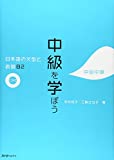
Chukyu o Manabou: Nihongo no Bunkei to Hyogen 82 Chukyu Chuki
For teaching methods, lesson plans, and materials, please move to each lesson’s page!!