新人君 It’s finally time to start learning grammar today. First, we’ll begin with Lesson 1. The class has just started, so it’s a bit nerve-wracking. Well, don’t worry too much! The class atmosphere improved a bit during the introduction of greetings, didn’t it? This time, let’s think together about how to flow through Lesson 1!! 
先輩さん |
The goal for this lesson is precisely this!!

To be able to talk about oneself and others

If by the end of this lesson, they can introduce their nationality, job, and age, then they’ve passed…
Below are the points to watch out for!!
①Q&A using “Ano kata wa donata desu ka?” and “~san desu. ~ no ~ desu.”
The sentence patterns are long and hard to remember.
Since they are not frequently used, they do not stick.
Focus on learning the use of 「の」 here!!
Once they get more accustomed to Japanese, they will naturally start using them.
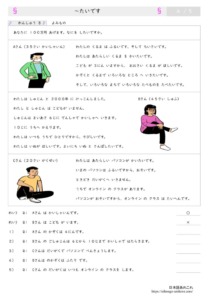
~は~です。(Nationality)
This is the first sentence pattern learners will study.
Be mindful of the blackboard as you proceed with the class.
Self-introduction
Watashi wa Nihonjin desu.
Have each student introduce themselves one by one.
If there are many students, those waiting for their turn may get bored.
If there are many students, create and distribute a self-introduction sheet so they can freely introduce themselves to each other.
If there is really no time, call on a few students to quickly go through it.
Watashi wa Tanaka desu.
Watashi wa Nihon jin desu.
Introducing Others
Riza-san wa Amerika-jin desu.
Practice sentence patterns with flashcards.
If there aren’t many students, take turns introducing the person next to you.
Kochira wa Riza-san desu.
Riza-san wa Amerika-jin desu.
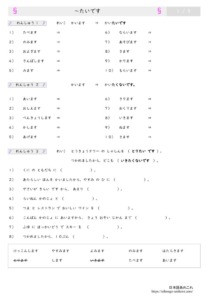
-pdf-212x300.jpg)
~は(Occupation)です。
Riza-san wa isha desu.
Practice sentence patterns with flashcards.
(If it’s a class for working adults, have them say their occupations.
It can be a hassle to confirm the vocabulary of the occupations that come up…)
Watashi wa kaishain desu.
Riza-san wa isha desu.
they’ll all say “Watashi wa gakusei desu” and it’ll be a failure…
Practice various occupations with flashcards…
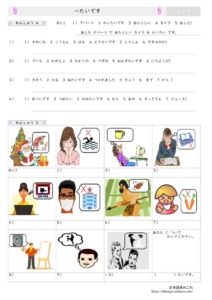
ja-pdf-212x300.jpg)
~は~(Age)です。
|
中堅さん The next item in the text is “~ja arimasen.” Hmm, should we introduce “~wa (age) sai desu.” first instead, following the flow of “~wa~desu”? That’s not a bad idea. You can also align nationality, occupation, and age vertically on the blackboard!!
Veteran |
ーーーーーーーーーーーーーーーーーーーーーーーーーーーーーーーーーーーーーーーーーーーーーー
Riza-san wa nijugosai desu.
Watashi wa 38-sai desu.
Riza-san wa 25-sai desu.
won’t they get stuck at the numbers?
Use that as a transition to “learning numbers,”
and once they can read the numbers, they’ll be able to say their age.
That leads to a sense of achievement as
they feel they’ve increased their ability to express themselves with new sentence patterns (knowledge).
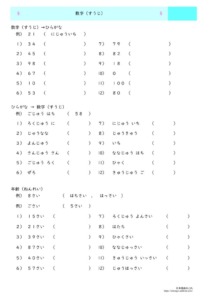
Introduction of Numbers (1-100)
Confirm special readings like issai (1 year old), hassai (8 years old), jussai (10 years old),
and also hatachi (20 years old). These come up often in listening comprehension.
Once they have a general grasp of number readings,
use flashcards to confirm how to say ages.
How old are you?
A: 26-sai desu.
Confirm with a few students, and once you feel they understand the meaning of “how old are you,”
practice by having them take turns asking the person next to them.
Riza-san wa nansai desu ka.
26-sai desu.
Yamada-san wa oikutsu desu ka.
56-sai desu.
This time it’s pair work!!
Pair work is good because it’s easy to have them practice asking and answering questions.
It gives all students a chance to speak at once.
so it’s easy!!
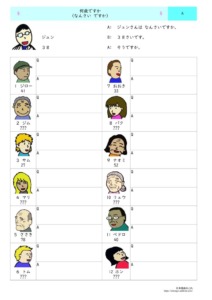
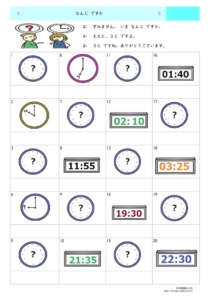
You can download the materials here.
The second half will cover “~ja arimasen” and “~desu ka” teaching plans and materials.
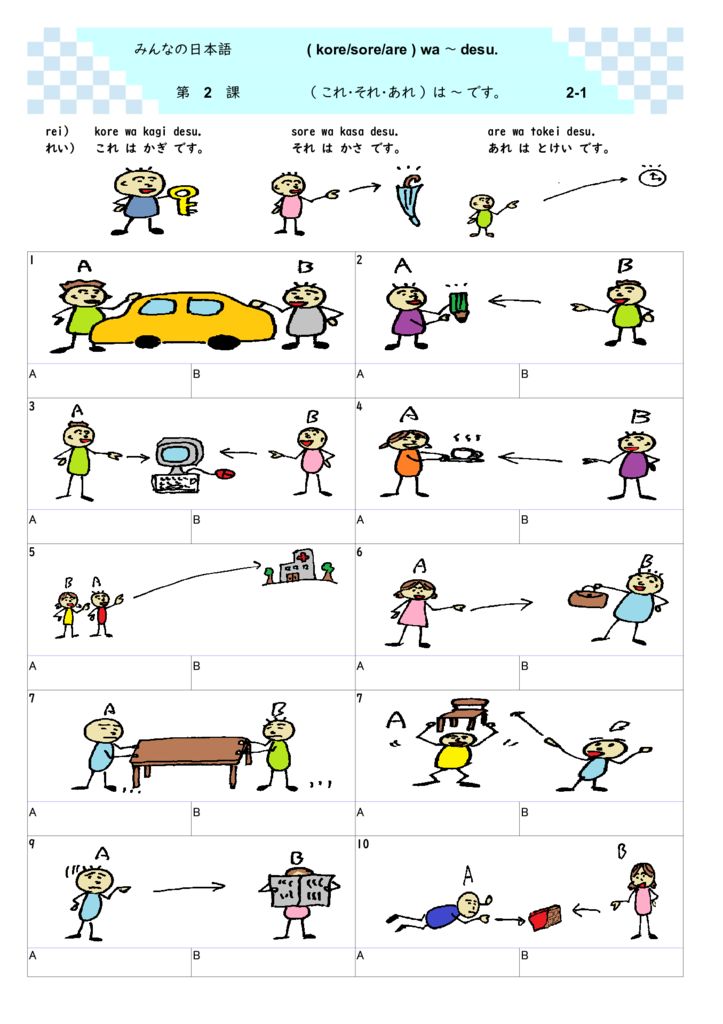




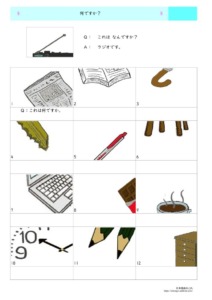
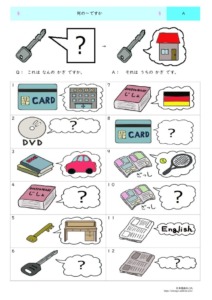




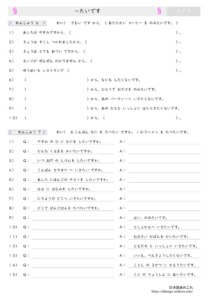
-pdf-212x300.jpg)

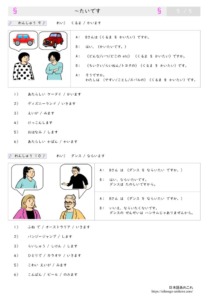
-pdf.jpg)